
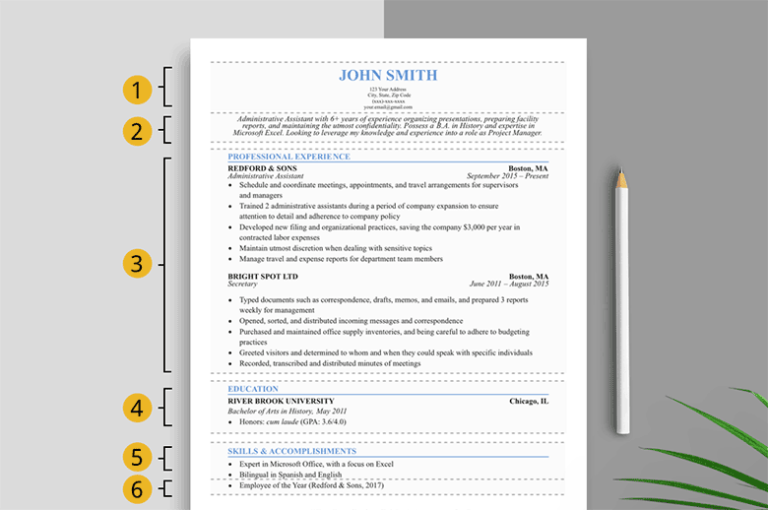
8 key components of a resume
This article will provide you with essential information on how to write an effective resume. The key components of a resume include:
- Your Contact Information
- Career Summary or objectives
- Experience
- Education/Qualifications
- Skills, competencies and hobbies
- Achievements, Certifications, or Hobbies (optional)
- Social Media Handles (such as Twitter and LinkedIn)
- Link to Personal Website, Blog, or Portfolio
For high school students or those seeking their first job, it’s advisable to place the education section above work experience. Make sure all information is current and accessible. Including your address is optional, especially if the job is in another state.
Career Summary or objectives: A resume summary or objective outlines your skills and career goals. Use a resume objective if you are a student, applying for scholarships, seeking internships, are an entry-level candidate, or if you have gaps in your employment history. Otherwise, opt for a resume summary.
Experience: This section forms the core of your resume. Include only relevant jobs from the past ten years and avoid any gaps in employment. List your most recent job first and describe the company if necessary. Use bullet points to detail your responsibilities and any notable achievements. Internships should be highlighted, especially if they were at well-known organizations.
Education/Qualifications: Place this section above experience if you are a recent graduate or still in school. List your most recent degree and institution first, including your major, degree type, university name, and any honors or awards received. If you are a professional, you may choose not to include your GPA.
Skills and Competencies: This includes industry-relevant keywords that potential employers value, such as:
- Communication (Written and Verbal)
- Leadership
- Planning and Strategic Thinking
- Analytical Thinking and Research
- Teamwork or Collaborative Work
Hobbies: This section is optional, but can provide insight into your personality.
Other Information: Students may include awards, honours, and extracurricular activities. If you are tech-savvy, you might add a section for certificates, licenses, and software proficiencies, as well as any publications or attendance at conferences and seminars. Include the number of languages you speak.
Tailor Your Resume: Ensure that your resume is customized to match the job description you are applying for.
Dos and Don’ts of a Good Resume
Do Not:
- Include your exact home address.
- Disclose your gender or marital status.
- Use an unprofessional email address or include photos.
- State salary requirements are in the introduction.
- Mention GPAs unless they are exceptional.
- Include short-term jobs.
- Add skills unrelated to the job you are applying for.
- List hobbies related to controversial topics.
- Be dishonest in your resume.
By following these guidelines, you can create a well-structured and effective resume that highlights your qualifications and appeals to potential employers.